Updated 06:56 AM,Aug 21,2023
Differences Between Civil and Military Aviation
Civil aviation and military aviation are two distinct forms of air travel, differing based on their purposes and objectives. Civil aviation has traditionally encompassed a broader scope than military aviation, with each sector varying in divisions, types of missions, and operational domains. The following outlines the key differences between the two.
By Concept
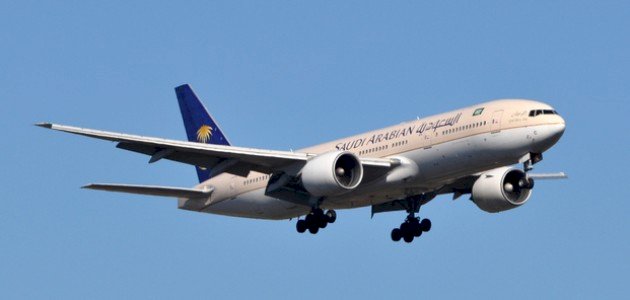
Civil aviation (in English: civil aviation) refers to all flight operations and aircraft used for personal or commercial purposes, such as transporting passengers or cargo, but not for military use. It encompasses all non-military and non-governmental aircraft—both private and commercial. Governments typically assign responsibility for civil aviation to civilian authorities and also involve private companies in airport management.[1]
It is worth noting that most countries around the world are members of the International Civil Aviation Organization (ICAO), which establishes shared practices and standards for civil aviation. The organization is funded and guided by 193 national governments to support diplomatic cooperation and collaboration in the field of air transport, particularly among nations that have signed the 1944 Chicago Convention.[2]
In 1994, December 7 was designated as International Civil Aviation Day as part of the 50th-anniversary celebrations of the ICAO's founding. In 1996, the United Nations General Assembly officially recognized December 7 as International Civil Aviation Day within the UN system.[3]
Military aviation, on the other hand, is an integral component of any nation’s armed forces. It serves either offensive purposes—such as attacking enemy targets—or defensive roles in safeguarding a country’s airspace. Throughout history, aircraft have remained a fundamental and indispensable element of military power.[4]
By Categories
Civil aviation comprises three main categories, as follows:[5]
Including scheduled and unscheduled passenger and cargo flights.
- Specialized Flight Operations
Where aircraft are used for specialized services such as pesticide and fertilizer spraying over farmland, aerial photography and surveying, search and rescue missions, and more.
Encompassing all other civil aviation activities—commercial or private.
As for military aircraft types, they are defined as any aircraft assigned to military duties, and there are numerous variants. However, the core types of military aircraft include the following:[6]
Designed to secure control of key airspace through air superiority missions or destruction of enemy aircraft.
These are larger, heavier, and less maneuverable aircraft designed to attack ground targets using bombs or missiles.
- Ground Support or Attack Aircraft
Operate at lower altitudes than bombers and air superiority fighters, supporting ground troops, armored units, and other surface targets.
- Transport and Cargo Aircraft
Large aircraft with substantial internal space, designed to carry weapons, equipment, supplies, and military personnel over medium to long distances.
Rotary-wing aircraft used for close ground support, troop deployment, short-range transportation, and surveillance.
- Unmanned Aerial Vehicles (UAVs)
Remote-controlled or autonomous aircraft equipped with sensors, target detection systems, electronic transmission devices, and even offensive weaponry.
By Missions
The primary responsibilities of civil aviation authorities include the following:[7]
- Regulating and coordinating aviation safety matters.
- Monitoring compliance with safety regulations and rules.
- Ensuring that personnel responsible for implementing safety controls are competent and capable of performing their duties effectively.
- Testing emergency response plans.
Regarding military aviation, the air force carries out vital and critical missions, including:[8]
Combat aircraft are used to destroy enemy critical infrastructure, air corridors, ammunition depots, and supply lines.
The air force provides close air support to ground forces and counters enemy air attacks and bombing raids.
Military aircraft play a crucial role in detecting submarines and warships, helping to keep coastal areas free from enemy attacks.
Military aircraft also deliver logistical supplies to forward bases, conduct airlift operations (transporting personnel and cargo), and participate in disaster relief efforts during natural or national emergencies.
References
- ↑ "civil aviation", Cambridge dictionary, Retrieved 28/11/2022. Edited.
- ↑ "About ICAO ", Icao, Retrieved 28/11/2022. Edited.
- ↑ "International Civil Aviation Day – 7 December ", Icao, Retrieved 28/11/2022. Edited.
- ↑ "Military aviation", Science daily, Retrieved 28/11/2022. Edited.
- ↑ "Type of Flight", Sky brary, Retrieved 28/11/2022. Edited.
- ↑ "military aircraft", Britannica, Retrieved 28/11/2022. Edited.
- ↑ "Organization Setup", Civila viation, Retrieved 28/11/2022. Edited.
- ↑ Kanchan Biswas, Military Engineering, Page 3. Edited.